I mentioned tomato foliar diseases in the last post. I mentioned them in a generic fashion, because there are so many, and because, franky, it's often hard to tell them apart. Here's a link to tomato disorders; click on "leaf" and you'll see what I mean. http://aggie-horticulture.tamu.edu/tomatoproblemsolver/index.html
They are often either fungal or bacterial. There are man-made sprays such as Daconil that many tomato growers use to prevent fungal infections. The older standard sprays were often copper based, and somewhat less effective. I don't use synthetic garden products anymore if I can help it, definitely not Daconil (it works great, I just don't like eating poison - that's why I grow my own food). Last year I tried preventative neem oil sprays, and it certainly seemed to keep foliar diseases to a minimum until the routine was interrupted. Perhaps this year I'll stick to the spray schedule...
So there is hope for preventing fungal infections, but what about bacterial? They recommend crop rotation and general cleanliness in the garden, but it's pretty hard to keep a sterile environment outdoors. I suspect there is a way to encourage soil microorganisms that keep the problem bacteria populations lower, which would have at least some impact. I don't know the answer yet.
I do know that tomato plants have more problems when they are stressed. To avoid stressing them, you want to provide them steady moisture and proper nutrients. The easiest way to ensure this is to mix plenty of compost in the soil, feed with a low nitrogen fertilizer, and mulch. Compost contains many micronutrients, helping to prevent deficiencies, and dramatically improves soil structure. Too much nitrogen causes lush green growth, which attracts disease-carrying insects and can slow flower production. Mulching tomato plants helps keep the soil from drying out and prevents infected soil particles from splashing onto the foliage during rain.
Showing posts with label compost. Show all posts
Showing posts with label compost. Show all posts
Sunday, January 25, 2009


Tuesday, November 20, 2007
Not such an industrious gardener? I fall into that category myself... We still have work to do.
Garden cleanup is important. Plant diseases lie dormant in last season's plant matter. Left undisturbed, they will come back to haunt you next year. It is easy to compost them, and if you turn the pile every three days or so for a couple of weeks during warm weather, it can destroy most of the undesireable microorganisms.
In my case, there are other chores as well. One such is gradually raising the lower beds to a desired level. (The garden is on a slope, and I have an innate desire to level dirt... don't ask me where it comes from.) I want to terrace sections of the garden, roughly20' x 20' each. Instead of buying topsoil, I import it from elsewhere in the two acre yard - preferably from very near. I add a little every year if I have the opportunity.
Recently, my neighbor was kind enough to bring a tractor and dig the footing for a greenhouse I want to build. The location for the greenhouse-to-be is in the garden, so there is now a pile of fresh soil (notice I didn't say "dirt") right where I want it. I've been sifting it through a 1/2" x 1/2" screen, directly into a wheel barrow. The resulting gravel and rocks go into another pile, which will eventually be used to backfill the greenhouse footing. The wheelbarrow goes straight downhill about 12' to its final destination.
This is a chore I can do a little at a time, a few days a week, or whenever. Yeterday as I was sifting out some gravel, I found half an arrowhead. I slowed to an even more leisurely pace after that, keeping an eye out for more of them. I've found three more broken pieces. This land borders a creek, which in turn empties into the White River not too far away. Another neighbor between here and the river has a field of mounds, left by Native Americans at some point. It's not uncommon for locals to have several buckets full of arrowheads and other stone tools that they've found in fields or caves. It is conceivable that I could find something of value during this garden chore.
Whether I find more arrowheads or not, I always try to accomplish more than one goal with every action. The pile of dirt, er, soil needs to be removed, the raised bed needs filled with sifted topsoil, rubble will be needed to backfill the footing... and I could stand to find some valuable archaeological artifacts. All four of these things are coming to fruition from little more than sitting on a bucket and sifting some soil.
According to my soil test results, I have another chore ahead of me. The garden needs to have high amounts of nitrogen added before next spring. Being an organic gardener, I have a few choices, and a big truckload of manure is one of them. I have one goat and three chickens producing manure for me, but it's not enough. I'll have to import some. One of the advantages of living in a rural community is that just about any kind of manure I'd want is available - often cheap, sometimes free. The question is, what kind do I want?
Starting with the obvious choice... I can get rabbit manure for free. Rabbit manure has a number of advantages over most others. Rabbit food is mainly composed of alfalfa, which is not only high in nitrogen, but also contains plant growth hormones. Do the hormones survive the rabbit's digestive system? I don't know, but it seems that way. Besides, a fair amount of the uneaten food ends up falling into the manure. And worms just LOVE rabbit manure. They turn it into vermicompost, which is literally perfect topsoil, complete with beneficial microorganisms.

What I like best about rabbit manure is that it is virtually free of weed seeds, so it can be used as a top dressing and mulch. Its dark color draws heat into the beds when it is used in this fashion. Especially when it has aged a bit, seeds can be sown directly in it. Great stuff.
So, when I use rabbit manure, I like to put it on last. By organic standards, fresh manure should be applied 3 to 4 months before anything growing in it is eaten (90 days for above ground vegetables, 120 days for those in contact with or near the soil.) So, if the first spring greens are ready to eat in, say, March, then fresh manure should have been applied in November! Use composted manure if you can (because it can be put off until much later in the winter...)
Moving soil, spreading or composting animal manure, managing cover crops... yes, there are still plenty of things to do for some of us.
Garden cleanup is important. Plant diseases lie dormant in last season's plant matter. Left undisturbed, they will come back to haunt you next year. It is easy to compost them, and if you turn the pile every three days or so for a couple of weeks during warm weather, it can destroy most of the undesireable microorganisms.
In my case, there are other chores as well. One such is gradually raising the lower beds to a desired level. (The garden is on a slope, and I have an innate desire to level dirt... don't ask me where it comes from.) I want to terrace sections of the garden, roughly20' x 20' each. Instead of buying topsoil, I import it from elsewhere in the two acre yard - preferably from very near. I add a little every year if I have the opportunity.
Recently, my neighbor was kind enough to bring a tractor and dig the footing for a greenhouse I want to build. The location for the greenhouse-to-be is in the garden, so there is now a pile of fresh soil (notice I didn't say "dirt") right where I want it. I've been sifting it through a 1/2" x 1/2" screen, directly into a wheel barrow. The resulting gravel and rocks go into another pile, which will eventually be used to backfill the greenhouse footing. The wheelbarrow goes straight downhill about 12' to its final destination.
This is a chore I can do a little at a time, a few days a week, or whenever. Yeterday as I was sifting out some gravel, I found half an arrowhead. I slowed to an even more leisurely pace after that, keeping an eye out for more of them. I've found three more broken pieces. This land borders a creek, which in turn empties into the White River not too far away. Another neighbor between here and the river has a field of mounds, left by Native Americans at some point. It's not uncommon for locals to have several buckets full of arrowheads and other stone tools that they've found in fields or caves. It is conceivable that I could find something of value during this garden chore.
Whether I find more arrowheads or not, I always try to accomplish more than one goal with every action. The pile of dirt, er, soil needs to be removed, the raised bed needs filled with sifted topsoil, rubble will be needed to backfill the footing... and I could stand to find some valuable archaeological artifacts. All four of these things are coming to fruition from little more than sitting on a bucket and sifting some soil.
According to my soil test results, I have another chore ahead of me. The garden needs to have high amounts of nitrogen added before next spring. Being an organic gardener, I have a few choices, and a big truckload of manure is one of them. I have one goat and three chickens producing manure for me, but it's not enough. I'll have to import some. One of the advantages of living in a rural community is that just about any kind of manure I'd want is available - often cheap, sometimes free. The question is, what kind do I want?
Starting with the obvious choice... I can get rabbit manure for free. Rabbit manure has a number of advantages over most others. Rabbit food is mainly composed of alfalfa, which is not only high in nitrogen, but also contains plant growth hormones. Do the hormones survive the rabbit's digestive system? I don't know, but it seems that way. Besides, a fair amount of the uneaten food ends up falling into the manure. And worms just LOVE rabbit manure. They turn it into vermicompost, which is literally perfect topsoil, complete with beneficial microorganisms.
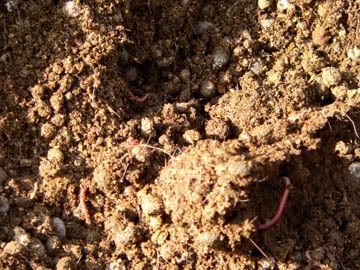
What I like best about rabbit manure is that it is virtually free of weed seeds, so it can be used as a top dressing and mulch. Its dark color draws heat into the beds when it is used in this fashion. Especially when it has aged a bit, seeds can be sown directly in it. Great stuff.
So, when I use rabbit manure, I like to put it on last. By organic standards, fresh manure should be applied 3 to 4 months before anything growing in it is eaten (90 days for above ground vegetables, 120 days for those in contact with or near the soil.) So, if the first spring greens are ready to eat in, say, March, then fresh manure should have been applied in November! Use composted manure if you can (because it can be put off until much later in the winter...)
Moving soil, spreading or composting animal manure, managing cover crops... yes, there are still plenty of things to do for some of us.
Subscribe to:
Posts (Atom)

